
Buying your first home is exciting, but it can also feel confusing. This first time home buyer checklist UK guide gives you the whole journey in simple steps. You will learn how to check your budget, save a deposit, get a mortgage, and pick the right home. You will also learn how to work with a solicitor, understand the extra costs, and get your keys without stress. Read it from top to bottom, or save it and tick off each step as you go.
If you are a first time home buyer UK wide, the process is mostly the same in England, Wales, Scotland and Northern Ireland. Some rules and taxes are different, and we point those out below.
Why You Need a First Time Home Buyer Checklist UK
Buying a home is probably the biggest purchase you will ever make. There are many people involved, such as lenders, estate agents, surveyors and solicitors. There are also many forms, fees and deadlines.
A first time home buyer checklist UK keeps you calm and organised. It helps you avoid common mistakes, like spending too much, forgetting hidden costs, or choosing a home with big problems. Think of it as a map. You can still take your time, but you always know the next stop.
Your First Time Home Buyer Checklist UK (Step by Step)
Here is the full list. Each step is explained in more detail below.
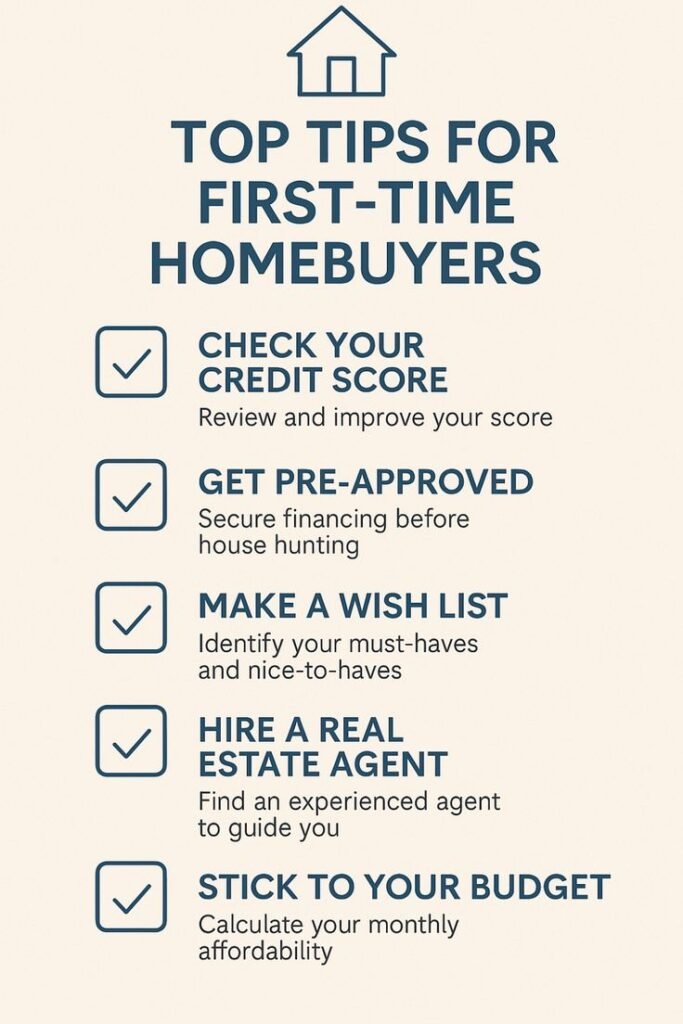
- Check your budget
- Check your credit report
- Save your deposit
- Look at government schemes and the Lifetime ISA
- Plan for extra costs
- Get a Mortgage in Principle
- Decide what you want in a home
- Start viewing homes
- Make an offer
- Hire a solicitor or conveyancer
- Apply for your full mortgage
- Book a survey
- Arrange buildings insurance
- Exchange contracts
- Complete and collect your keys
Part 1: Getting Your Money Ready
Step 1: Check Your Budget
Before you look at a single house, look at your own money. Write down what you earn each month and what you spend. Include bills, food, travel, phone, subscriptions and savings.
Then think about what a mortgage would cost every month. Do not stretch yourself too far. A good rule is to leave some room in your budget in case interest rates go up or life changes. Use a free online mortgage calculator to get a rough idea of what you can borrow. Most lenders offer around four to four and a half times your yearly income, but this can vary.
Step 2: Check Your Credit Report
Lenders look at your credit history to decide if they can trust you with a loan. You can check your credit report for free with the main UK credit agencies, such as Experian, Equifax and TransUnion.
Look for mistakes, old accounts you forgot, or missed payments. Fix any errors early. Small habits also help, such as paying bills on time, staying on the electoral register, and not applying for lots of credit just before a mortgage.
Step 3: Save Your Deposit
Your deposit is the money you pay upfront towards the home. Many first time buyers aim for 10% of the price, but some mortgages allow a smaller deposit of 5%. A bigger deposit usually means a lower interest rate and lower monthly payments.
For example, on a £200,000 home, a 10% deposit is £20,000. If saving feels slow, try setting up a standing order on payday so the money moves before you can spend it.
Step 4: Look at Government Schemes and the Lifetime ISA
This is one of the best first time buyer tips UK people often miss. If you are aged 18 to 39, you can open a Lifetime ISA. The government adds a 25% bonus to what you save, up to £1,000 per year. You can use it to buy a first home worth up to £450,000, as long as the account has been open for at least 12 months.
There are also other schemes, such as shared ownership, where you buy a part of a home and pay rent on the rest, and the Mortgage Guarantee Scheme, which helps people with small deposits. Rules and offers change, so always check GOV.UK for the latest details.
Step 5: Plan for Extra Costs
Many first timers only think about the deposit. But buying a home comes with other costs too. Plan for these:
- Stamp Duty: In England and Northern Ireland, first time buyers currently pay no Stamp Duty on the first £300,000 of a home costing up to £500,000. Above that, normal rates apply. Scotland uses Land and Buildings Transaction Tax, and Wales uses Land Transaction Tax, with their own rules.
- Solicitor fees: Often £800 to £1,500 or more, plus other small charges.
- Survey costs: Usually from £250 to £1,000 or more, depending on the type and the size of the home.
- Mortgage fees: Some lenders charge arrangement or booking fees.
- Moving costs: Removal van, new furniture, cleaning, and so on.
Tax rules can change, so check the current figures on GOV.UK before you buy.
Step 6: Get a Mortgage in Principle
A Mortgage in Principle (also called an Agreement in Principle) is a letter from a lender that says how much they might lend you. It is not a final promise, but it shows estate agents and sellers that you are serious.
It usually takes only a short time to get. You can go straight to a bank or use a mortgage broker. A broker can compare many lenders and may find you a better deal, so it is worth asking.
Part 2: Finding and Choosing Your Home
Step 7: Decide What You Want
Make two lists. The first is your “must-haves”, like the number of bedrooms, the area, and train links. The second is your “nice-to-haves”, like a garden or a garage.
Think about daily life. How long is the trip to work? Is there a school, shop or doctor nearby? Visit the area at different times, such as morning, evening and weekends, to see how busy and noisy it is.
Step 8: Start Viewing Homes
Use sites like Rightmove, Zoopla and OnTheMarket, and also sign up with local estate agents. When you view a home, do not just look at the paint and the furniture. Check these things:
- Damp, mould or water stains on walls and ceilings
- The age and condition of the roof, windows and boiler
- Water pressure and the number of plug sockets
- Mobile phone signal and broadband speed
- Parking, noise, and the state of nearby homes
Take photos and notes. Ask why the owner is selling and how long the home has been on the market.
Step 9: Make an Offer
When you find the right home, you make an offer through the estate agent. You do not have to pay the asking price. Look at what similar homes nearby sold for and decide on a fair price.
Remember, an offer in England, Wales and Northern Ireland is not legally binding until contracts are exchanged. This means either side can change their mind. In Scotland, the process is different, and a legal offer can become binding much sooner. Talk to your solicitor before making a formal offer there.
Part 3: The Legal and Safety Steps
Step 10: Hire a Solicitor or Conveyancer
A conveyancer is a legal expert who handles the buying process. They check the legal papers, run searches on the property, deal with the seller’s solicitor, and move the money safely.
Ask for a clear quote with all fees listed. Choose someone who is regulated and who replies to your emails and calls. A good one can save you from big problems later.
Step 11: Apply for Your Full Mortgage
Once your offer is accepted, you apply for the full mortgage. The lender will ask for proof, such as payslips, bank statements, ID and your deposit details. They will also value the home to make sure it is worth the price.
Answer every question honestly and send papers fast. Delays often happen because of missing documents.
Step 12: Book a Survey
A survey checks the condition of the property. A lender’s valuation is not a survey, as it only protects the lender. Surveys protect you. There are three common types:
- Level 1: A basic check, best for new or very simple homes.
- Level 2: A more detailed check, good for most normal homes.
- Level 3: A full, deep check, best for old, large or unusual homes.
If the survey finds serious problems, you can ask the seller to lower the price, ask them to fix the issue, or walk away.
Step 13: Arrange Buildings Insurance
Most lenders need you to have buildings insurance from the day contracts are exchanged. It covers fire, floods and other damage to the building itself. Compare quotes online and do not just take the first one you see. Contents insurance for your belongings is a smart extra.
Step 14: Exchange Contracts
This is the big moment when the deal becomes legally binding. You and the seller both sign the contracts, and you pay your deposit. After this, if you pull out, you can lose your deposit and may face legal action.
Before you exchange, make sure you have read everything, understood the costs, and agreed on a moving date.
Step 15: Complete and Collect Your Keys
Completion day is when the rest of the money is sent to the seller and the home becomes yours. The estate agent will tell you when the keys are ready. Take meter readings, update your address, set up your bills, and arrange broadband before you move in. Then enjoy your new home.
First Time Home Buyer Checklist UK Experts Often Share
Here are some quick first time buyer tips UK buyers find useful:
- Keep your job and money stable during the process. Avoid new loans or big purchases.
- Do not stop saving once you move in. Keep an emergency fund for repairs.
- Do not fall in love with one home too fast. Stay calm and stick to your budget.
- Ask questions. A good agent, broker and solicitor will explain things in simple words.
- Be patient. A normal purchase can take several months.
What to Do When First Time Home Buyer Checklist UK: Common Mistakes to Avoid
Many people want to know what to do when buying your first home UK without making costly errors. Avoid these common ones:
- Borrowing the maximum amount. Just because a lender says yes does not mean it is comfortable for you.
- Forgetting extra costs. Fees and moving costs add up fast.
- Skipping the survey. A small saving now can become a huge repair bill later.
- Not shopping around. Compare mortgages, solicitors and insurance.
- Ignoring the long-term plan. Think about whether the home still suits you in five years.
If you follow a first time buyer guide UK like this one, you will be ahead of most beginners.
Frequently Asked Questions (FAQs)
How much deposit do I need as a first time buyer in the UK?
Most buyers aim for 5% to 10% of the home price. A bigger deposit often gets you better mortgage rates. For example, on a £250,000 home, 5% is £12,500 and 10% is £25,000.
How long does it take to buy a house in the UK?
On average, it takes about three to six months from an accepted offer to getting your keys. It can be faster or slower depending on the chain, the survey and how quickly everyone replies.
Do first time buyers pay Stamp Duty?
First time buyers in England and Northern Ireland get a discount on Stamp Duty, but only up to a set price limit. Scotland and Wales have their own taxes. Always check the latest rules on GOV.UK because they can change.
What is a Mortgage in Principle?
It is a letter from a lender that shows how much they may lend you. It is not a final offer, but it helps you look serious when you make an offer on a home.
Should I use a mortgage broker?
A broker can compare deals from many lenders and explain the process in plain words. Some charge a fee and some are paid by the lender, so ask how they are paid before you start.
What is the first thing I should do when buying a home?
Check your budget and credit report first. Then start saving your deposit and get a Mortgage in Principle. This is the strongest start for any first time home buyer checklist UK.
Can I buy a home with a small deposit?
Yes, 95% mortgages exist, but they can come with higher rates and stricter checks. A bigger deposit gives you more choice and lower monthly payments.
Final Thoughts
Buying your first home takes time, but it does not have to be scary. Take it one step at a time, keep your money plan clear, and ask for help from trusted experts. Use this first time home buyer checklist UK as your guide, tick off each step, and you will be much closer to holding your own keys.
This article is for general information only and is not financial or legal advice. Rules, tax rates and schemes can change, so always check GOV.UK and speak to a qualified mortgage adviser or solicitor before you decide.